

Why I am a "Kalar"
Mohinga, Biryani, and the Refusal to Be a Guest


On my NRC (National Register of Citizens) card, my ethnicity—or rather, ethnicities—is listed as Kayin, Kaman, Yakhine (Rakhine), Bama, Bengali, and Bengali.
Yes, Bengali appears twice: once because I am Rohingya, and once because I am Bengali. That small bureaucratic repetition, absurd as it may seem, says something rather revealing about Burma and about the fiction of “pure” identity. It shows, at the very least, that identity in Burma has never been as clean, singular, or coherent as nationalist rhetoric wants us to believe. It is layered, mixed, inherited, imposed, negotiated, denied, and sometimes even repeated by the state itself in ways that almost expose the fragility of its own categories.

So when I say, “I am kalar,” I am not saying it recklessly. I know what the word has become. I know the violence and implications attached to it. I know how it is used on the tongues of racists, nationalists, Islamophobes, and those who want to remind people like me that we are, supposedly, not fully from Burma—and therefore not really “Burmese.” I know that for many Muslims, Rohingya, Bengalis, Indians, and people of South Asian descent in Burma, kalar (ကုလား) is not merely a word. It is a wound. It is a constant reminder that we do not really belong.
But I also know that the word has a history before its weaponization. And I know, more importantly, that refusing the word has not freed us from the structures that made it violent in the first place.
That is the difficulty.
Because what exactly is the alternative? If we say “Muslim,” we reduce race to religion. If we say “Indian,” or more precisely, “people of Indian descent”—India-nwe-pwa (အိန္ဒိယနွယ်ဖွား) in Burmese—we impose a modern national category onto people whose histories are far more complicated than the borders of the modern Indian state. Pakistan and Bangladesh are obvious examples. Not only that, the phrase sounds quite formal, and we lose the actual social category that exists in Burmese life. No one really speaks like that. No one organizes memory, prejudice, affection, distance, or belonging through such artificial terminology.
Kalar, for better or worse, names something real, something concrete.
It names a social formation that cannot be reduced to religion, nationality, phenotype, or ancestry alone. It names those who are marked in Burma as having some form of South Asian origin or association, whether through skin color, language, food, dress, religious practice, bodily features, family history, or simply through the prejudiced imagination of others. It names a people who have been in Burma for generations, who have contributed to Burma, who speak Burmese, who think in Burmese, who belong to Burma, and who are nevertheless often treated as permanent outsiders.
This is why I think the issue is not simply whether the word kalar is offensive. Of course it is offensive when used offensively—sauk kalar (စောက်ကုလား) being an obvious example. The more important question is: who gets to define it?
Do racists get to keep the word forever? Do nationalists get to dictate its meaning? Do those who used it to humiliate us also get the final say over whether we can reclaim it?
I do not think so.
The History of the Word Is Not as Simple as People Pretend
Language carries history and the Burmese language is no different. It carries with it traces of older worldviews, social hierarchies, and inherited prejudices, among other things. A word can outlive the world that produced it, but it can also absorb new meanings as power changes around it. Kalar is one such word.
This is why the usual arguments about kalar are often too simplistic and reductive. Some insist that it simply means “Indian.” Others insist that it simply means “Muslim.” Others claim that it has always been a slur and nothing else. But the historical record is more complicated than any of these claims.
The Burmese term kalar is old. It appears to have been used long before the modern racial and religious politics now attached to it. Its older semantic range was broader than “Indian” in the narrow modern sense. It referred, in different contexts, to peoples associated with lands west of Burma. It could include South Asians, but it was not limited to them. Colonial-era dictionaries still preserved the expression kalar phyu (ကုလားဖြူ), literally “white kalar,” for Europeans. That alone should give us pause. If Europeans could be called “white kalar,” then the word could not have originally meant simply “dark-skinned Indian” or “Muslim.” Its older meaning was broader, closer to “western foreigner” or “person associated with the lands west of Burma.”
The etymology is also debated. One serious explanation connects the word to Pāli/Sanskrit kula (ကုလ). The Myanmar-English Dictionary, compiled by the Myanmar Language Commission, lists Pāli kula as the origin of kalar, while U Hote Sein’s Pāli-Burmese dictionary defines kula as race, noble race, home, one’s parents’ home, or a patron who feeds and takes care of another. If this etymology is correct, then the term’s older semantic field was not simply racial (slur), but referred to lineage, belonging, origin, and inherited social identity. This would make sense in a Burmese context where people from the Indian subcontinent were associated with caste, lineage, and inherited forms of social identity.
Other explanations have also been proposed. Another theory connects the word to the Chola/Cola world of South India (or as we know it, Chulia), which is historically plausible given the long history of South and Southeast Asian maritime contact. A third explanation links it to Indic kāla, meaning “black” or “dark,” but this seems more convincing as a later racial reinterpretation than as the original meaning, precisely because older usage could include “white kalar” as well. A fourth explanation, at least in public rhetoric, is that kalar derives from ku-lā (ကူးလား), meaning “to cross over” or “to come across,” a border. To my knowledge, however, this explanation has little serious historical or linguistic credibility.
The term also appears in older Burmese historical sources. Pagan-era inscriptions, for example, refer to Indian dancers and drummers using the term kalar, while expressions such as kalar kyaung (ကုလားကျောင်း) were used for Indian-style monasteries or temples. Figures such as Aung San and U Nu are reported to have used the word (but without intending any negative connotation).
None of this means that kalar is harmless today simply because it did not begin as a slur. That is precisely where we need to be careful. A word can have a non-derogatory origin and still become violent through history. Meaning is not fixed at the point of origin; it is transformed by power, repetition, humiliation, and social use.
The point, then, is not to recover some pure “real” meaning of the word, as if history can be undone by etymology. The point is to recognize that kalar did not fall from the sky as a fully formed slur. It became what it became through history.
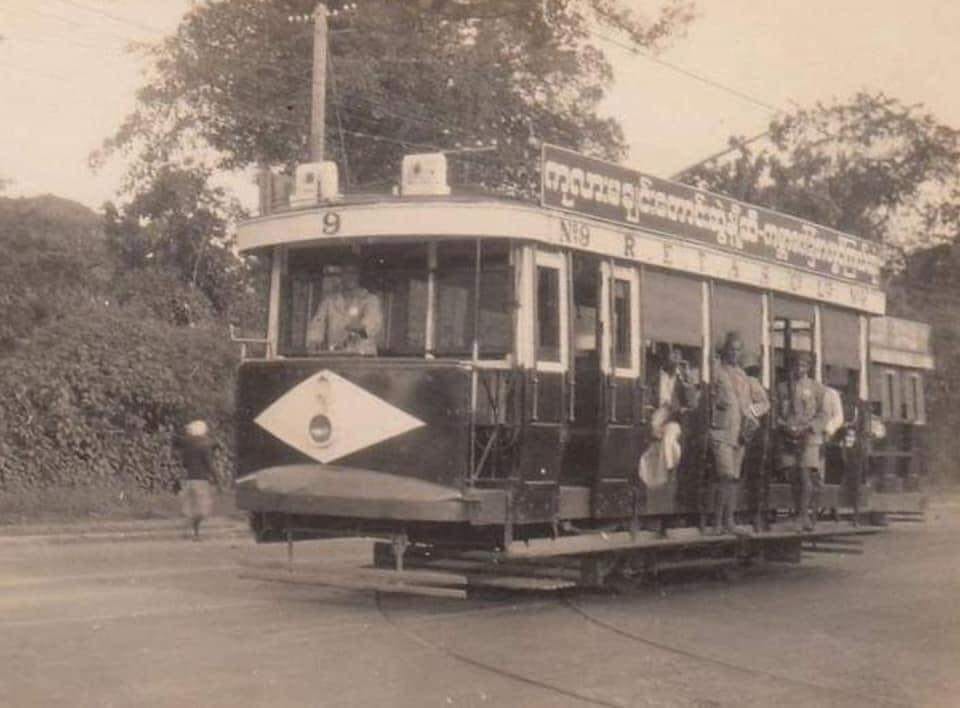
The decisive shift, however, for the negative sense of the word seems to have taken place under colonial rule. Burma was governed as part of British India, and large numbers of Indians came to Burma as laborers, clerks, dockworkers, moneylenders, merchants, policemen, and administrators. For many Burmese, colonial domination was not encountered only through distant British rulers, but through the visible presence of Indians in the colonial economy. Indians became associated with bureaucracy, labor competition, debt, urban change, and social displacement, among other things. This does not justify anti-Indian racism, of course, but it helps explain how an older word became increasingly charged with resentment.
Kalar, it seems, became a container for this colonial grievance.
It absorbed race, class, religion, resentment, colorism, nationalism, and anti-colonial humiliation. Then, in the postcolonial period, especially through Buddhist nationalism and anti-Muslim politics, the word narrowed even further. Although it continued to refer primarily to people of Indian or South Asian origin, it increasingly became associated with Muslims, despite the fact that Hindus too are referred to as kalars. Thus, the word’s center of gravity shifted from geography to race, then from race to religion, and finally from religion to national exclusion—and eventually, the language of genocide.
By the time we arrive at modern Burma, kalar is no longer just an ethnonym. It is a political accusation.
It means: you are not from here.
It means: your religion is foreign.
It means: your body is foreign.
It means: your ancestors came later.
Most importantly, it means: you do not really belong here.
This is what I reject. Not the existence of the term itself, but the political theology of exclusion that now hides inside it.
Reclaiming Is Not Forgetting
Some may say that reclaiming kalar is impossible because the word is too damaged. I understand that objection. In fact, I do not dismiss it at all. Many people have been humiliated by this word. Many have heard it in moments of bullying, discrimination, suspicion, and violence. It would be arrogant to tell every person who has suffered under the word that they must now embrace it. That is not my argument.
My argument is more modest: those of us who have been named by the word should have the right to decide what to do with it. If some reject it entirely, that is their right. If others choose to reclaim it, that too should be possible.
This has happened elsewhere. Words that were once used as insults have, in some cases, been reclaimed by the very communities they targeted. “Queer” is perhaps the clearest example. It was once a term of contempt, but many LGBTQ+ people transformed it into a political, intellectual, and communal identity. Of course, not everyone accepts it. Some still hear the injury first. But its meaning has undeniably changed because the community struggled over it.
The same can be said, in a different and far more restricted way, about how some Black communities have reworked the N-word in in-group contexts. Again, this does not mean outsiders can use it freely. That is precisely the point. Reclamation is not permission for everyone. It is not a general social license. It is an act of semantic resistance by those who were targeted.
The difference between being called kalar and calling myself kalar is not insignificant.
When someone calls me kalar to remind me that I do not belong, the word is doing the work of exclusion and semantic violence. But when I say, “I am kalar,” I am refusing the shame that the word is supposed to produce. I am saying: yes, I know what you see when you look at me. I know the history you are trying to attach to my body. I know the place you want me to occupy. And I reject the inferiority you built into that name. In turn, I invoke the word’s older history and usage not to erase its violence, but to refuse the inferiority others have attached to it and to reclaim the agency to name who I am and what I am.
This is, of course, not a naive return to some pure original meaning. We cannot simply pretend that the word has not been poisoned and corrupted. But perhaps we can refuse to let that poison be its final meaning. Perhaps reclamation means insisting that those who turned the word into a weapon do not get to have the last word.
To reclaim kalar is not to forget its violence. It is to remember it differently.
It is to say that the shame belongs not to those who were called kalar, but to those who used the word to degrade them. It is to fight semantic violence with semantic resistance.
The Problem with Polite Alternatives
One reason I am not satisfied with simply abandoning the word is that the available alternatives are, frankly, inadequate and impractical.
“Muslim” does not work. It names a religion, not a race, ethnicity, or historical community. There are kalars who are not Muslim, such as Hindus, and there are Muslims in Burma who are not kalar, such as Panthays and Pashus. To collapse the category into “Muslim” is to accept the very Islamophobic logic that made the word dangerous in the first place. It also expects people to be referred to by their religion, as if strangers are supposed to know one’s religion without one identifying it oneself.
“Indian” also does not work. Many people called kalar are not Indian in any meaningful national sense. Some are Bengali, Tamil, Chulia, Gujarati, Pathan, Surti, or of mixed ancestry. Some have lived in Burma for generations and have no actual relationship to India as a nation-state—like the Rohingya who are indigenous to Arakan. Others descend from regions that are now Bangladesh or Pakistan. Some are simply Burmese Muslims whose “Indian-ness” exists mostly in the imagination of others. And while calling people by their specific ethnic identities would be ideal in a perfect world, it does not solve the social problem I am naming here. The category kalar functions precisely because—from the perspective of the outsider—these distinct ethnic identities are collapsed into one racialized social category.
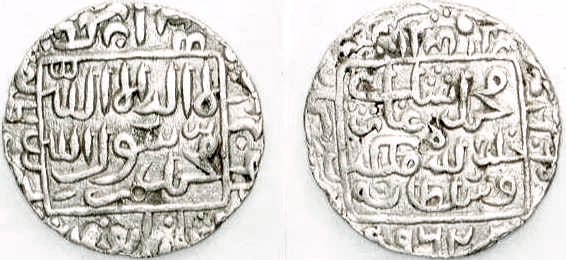
Another often proposed alternative is “South Asian descent.” This is better in academic writing, but it is not a living communal term. It is too sterile, too formal, too NGO-like. It can describe a demographic, perhaps, but it does not name the social experience of being marked as kalar in Burma.
The only other alternative I can think of is the word desi. In some ways, desi is probably the closest available equivalent to kalar. It comes from the Sanskrit/Hindi-Urdu word deś/desh, meaning land, country, or homeland, and in modern usage it often refers broadly to people, cultures, foods, and practices associated with the Indian subcontinent and its diaspora. In places like the United States, Canada, and Britain, desi can function as a loose umbrella term for Indians, Pakistanis, Bangladeshis, and sometimes other South Asians, especially when people want to name a shared cultural world without reducing everyone to one nation-state or one ethnicity.
This is why desi is tempting. It does some of the work that kalar does. It can name a broad South Asian formation without the racist undertones, without reducing the matter to religion, and without pretending that Bengalis, Gujaratis, Chulias, and others are all the same ethnicity. It is capacious, informal, and already used by many South Asians themselves.
But the problem is obvious: desi is not a Burmese social category or word. It does not carry the history of how people are marked in Burma the way kalar is legible in Burmese life. To use desi would be to import a new word into Burmese discourse and then ask people to reorganize an already existing social reality around it. That may be possible in diaspora discourses, but as a practical replacement for kalar in Burma, it feels unworkable. It may be the closest conceptual alternative, but it is not a living Burmese alternative.
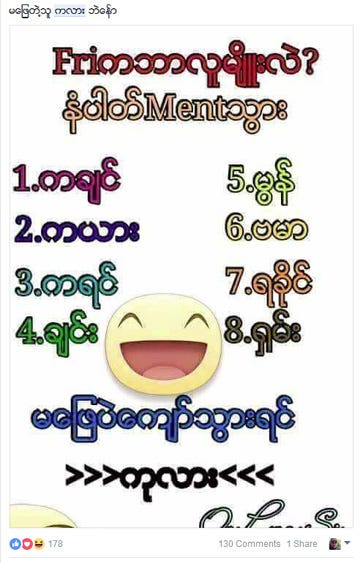
This is why the word kalar persists.
And here we need to be honest. Our desire to replace kalar with a more acceptable term comes less from a genuine reckoning with racism and more from discomfort with naming the thing directly. It allows us to appear progressive without confronting the deeper structure. We can say, “Do not use that word,” while continuing to believe that we are foreign, suspicious, culturally incompatible, or only conditionally Burmese—all without providing a viable alternative. It fails to do both the pragmatic and substantive work.
We should also recognize that changing the word does not automatically change the racist-Islamophobic worldview that underpins it.
If tomorrow everyone stopped saying kalar and began saying “Bengali” with the same contempt, nothing would be solved. In fact, this is already what has happened to the Rohingya. “Bengali” is not a neutral descriptor in the Burmese political context. It has been weaponized precisely to deny Rohingya identity and existence, my NRC being a prime example. It is used to say: you are not indigenous, you are not from here, you are an illegal migrant, you are a problem to be managed.
So the issue is not simply the label itself. The issue is the structure of exclusion that survives every terminological change.
We Are Not Guests
The most dangerous idea attached to kalar is not merely that we are different. Difference, by itself, is not the problem. The problem is that our difference is interpreted as foreignness. And that foreignness is then used to make us guests—as if we live in Burma only by permission, and therefore do not really belong.
This language of “guest”—ei the (ဧည့်သည်)—is everywhere in Burmese Buddhist nationalist discourse. It is sometimes said gently, sometimes aggressively, but the meaning is usually the same:
You may live here, but you are here by permission.
You should be grateful.
You should behave.
You should not demand too much.
You should not speak in your own languages.
You should not dress too visibly in your cultural/religious attire.
You should not insist on your own history.
You should not complicate the national story.
After all, you are guests, and guests do not have equal claims. Guests can be tolerated, but they do not belong. And more importantly, guests can be discarded whenever necessary. The quintessential example is Aung San Suu Kyi throwing the Rohingya under the bus and siding with the junta—perhaps, and I am guessing here (quite charitably too), for the “greater good” of Burma, as if the Rohingya were not themselves part of Burma.
And this is precisely the problem.
What makes this even more ironic is that in a 1944 Anti-Fascist People’s Freedom League declaration, “Kala[r]s” were listed alongside Karens, Shans, Kachins, Chins, Mons, Chinese (“Ta-yoke”), and other minorities whose political, economic, and social rights required protection. Here, “Kalars” are a rights-bearing minority within Burma, not simply guests living there by permission. But despite this, once a people are imagined as guests rather than as a community with equal claims to belonging, the demand placed on them changes. They are no longer simply asked to participate in the country. They are asked to prove that they deserve to remain in it.
The demand that kalars must “integrate” into Burmese culture is often presented as common sense. But what does “integration” actually mean here? Does it mean learning Burmese? Many of us already speak Burmese as our first or dominant language (in my case, both Urdu and Rohingya are lost to me). Does it mean participating in Burmese society? We already do. Does it mean loving Burma? Many of us do, with many kalars involved in the nation’s history and liberation—despite everything Burma has done to us.
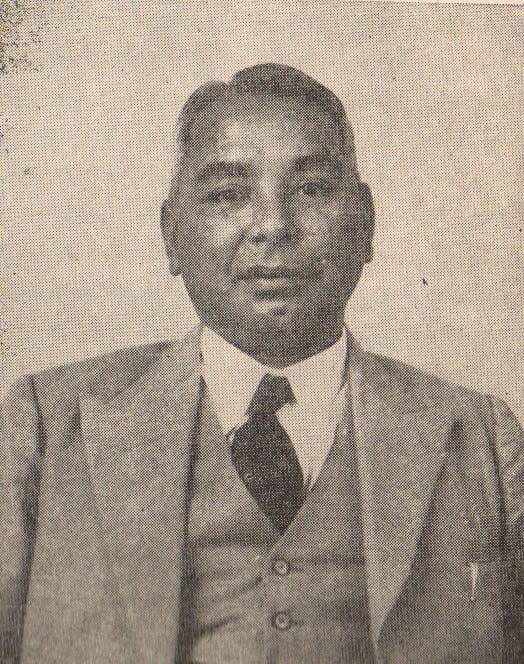
So what is really being asked?
The answer, often, is not participation but legibility. “Integration” becomes the demand that we make ourselves recognizable according to Bama Buddhist norms of national belonging. We may speak Burmese, live in Burma, love Burma, and contribute to Burma, but if we appear too visibly Muslim, too visibly Indian, too visibly Rohingya, or too visibly kalar, our belonging becomes suspicious again. The issue is not whether we are part of Burma. The issue is how much of ourselves we are allowed to carry in public before Burma withdraws its recognition from us.
What is especially painful is that many Muslims themselves have absorbed this logic. They repeat the same nationalist assumptions back to their own communities, only in softer language. They say we should “adapt,” “be realistic,” “not provoke,” “respect Burmese culture,” “avoid standing out,” or “show that we are Burmese too.” On the surface, this sounds practical, even wise. But beneath it is often suppression and internalized racism: the quiet belief that our own inherited forms of dress, language, food, names, and religious expression are liabilities to be managed before the majority. I have seen this even among friends, some of whom outright refuse to identify with their own ethnic origins, let alone with kalar, and insist instead that they are simply “Burmese”—almost in an ethnic sense, as if Burmeseness requires the denial of everything else.
This is how domination becomes intimate. It does not always arrive as an explicit order from the outside. Sometimes it becomes a voice within the community itself. The majority does not need to demand assimilation at every moment because minorities begin disciplining themselves. We learn to anticipate what will make us look “too Muslim,” “too Indian,” or too visibly kalar. We become careful before anyone tells us to be careful. We shrink before anyone explicitly asks us to shrink. And then, tragically, some of us mistake that shrinking for wisdom.
We see this most clearly in debates over clothing. Some Muslims insist that one should wear “Burmese” attire instead of so-called “foreign” Muslim or South Asian clothing, such as the kurta, jubbah, thawb, sari, or other inherited forms of dress. Even in the mosque, clothing that marks one as visibly Muslim, Indian, or more broadly kalar can be dismissed as backward, foreign, or excessive. Meanwhile, Bama traditional attire is treated as “properly” Burmese and progressive. In some cases, this logic has even been institutionalized, as with spaces like the 59th Street Mosque, where wearing traditional Burmese clothing becomes a public statement about what “proper” Burmese Muslim respectability is supposed to look like.


To be clear, the problem is not Burmese clothing itself. There is nothing wrong with Muslims wearing Burmese attire; in fact, we should wear it when the circumstance calls for it, just as we might wear a suit when the occasion demands it. The problem begins when one form of dress is treated as “normative” while another is treated as foreign or backward. If someone wishes to wear Burmese traditional clothing, that should be respected. If someone wishes to wear a kurta, thawb, jubbah, sari, hijab, or any other form of cultural or religious attire, that too should be respected. People should have the right to wear what they wish without being made to feel that their clothing determines the legitimacy of their belonging or how “progressive” they are.
Nor is there anything wrong with wanting Islam in Burma to speak in a Burmese idiom, to take root in Burmese language, history, and culture. In fact, I think there is a real need for a localized, even indigenous, Islam in Burma—what I would call Burmese Islam. The Islamic Institute of Burma, which I founded, is in many ways one attempt to contribute to precisely this project: to make Islam speak meaningfully in Burmese, for Burmese Muslims, within the intellectual, cultural, and historical realities of Burma, and ultimately to help give birth to a distinctly Burmese tradition of Islam.
But Burmese Islam cannot be built through self-erasure. Localization is not assimilation. An indigenous Burmese Islam should not mean that Bengali, Rohingya, Chulia, Gujarati, Pathan, Kaman, or other Muslim histories disappear into a single Bama cultural mold. Nor should it mean that the kurta, jubbah, thawb, sari, hijab, or other visible markers of Muslim and South Asian identity must be treated as embarrassments to be erased. Cultures become local organically through translation, adaptation, mixture, memory, appropriation, and everyday life—not by forcibly copying the dominant group.
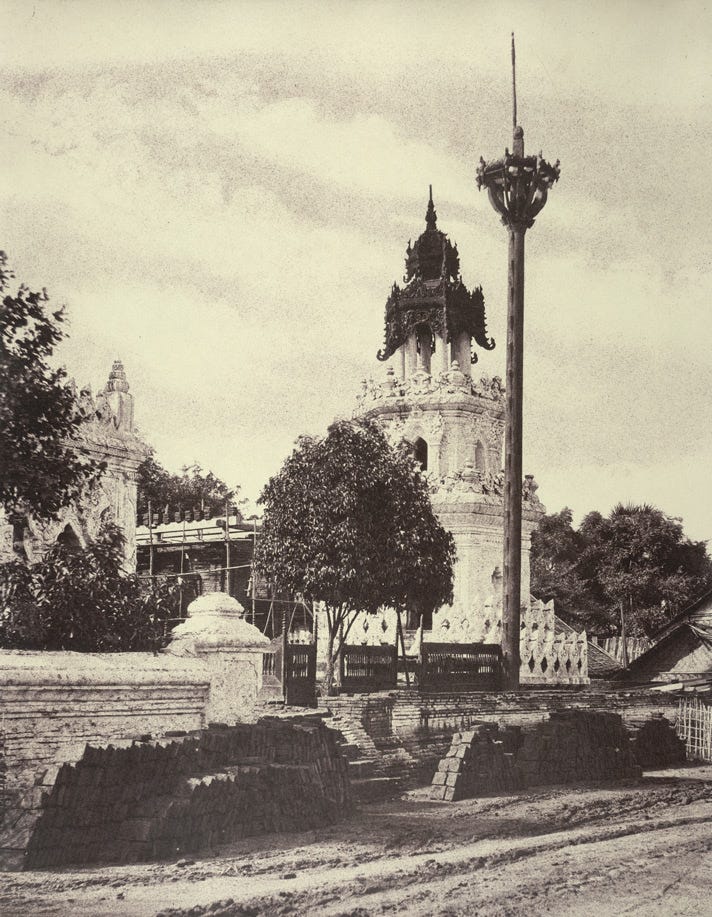
The goal, then, should not be a Muslim who has become culturally smaller in order to be accepted. It should be a Muslim who can be fully Burmese without ceasing to be Bengali, Rohingya, Indian, Tamil, Chulia, Kaman, or kalar. It should allow a person to wear a longyi one day and a kurta another day, or both simultaneously, as many do; to wear a jubbah to the mosque without being seen as backward; to speak Burmese without feeling ashamed of Urdu, Hindi, Arabic, or any other languages tied to family and religious memory.
The same is true of food. Mohinga is often treated as self-evidently Burmese, while biryani is marked as foreign/kalar—as if one belongs naturally to the land and the other always points somewhere else. But this distinction collapses the moment we look honestly at Burmese life. Kalars have eaten mohinga for generations, just as they have made biryani local in its own right. Burmese biryani—danbauk—is not simply “Indian biryani” transplanted unchanged into Burma. It is its own variety of biryani in its own right, and in many ways, it is already a Burmese dish, shaped by the histories and kitchens of the people who made Burma their home. (I myself can attest that danbauk is quite different from regular biryani—and, in my opinion, much tastier.)
A single family can eat mohinga for breakfast and serve danbauk at a wedding. The same person can crave both. The same tongue can taste both as home. That is precisely the point: belonging is not proven by choosing one dish over the other. Burmese life has always been made from mixtures, borrowings, adaptations, and local transformations. Mohinga and biryani are not opposites. They are both part of the world we inherited, cooked, shared, and made our own. That is why “between mohinga and biryani” is not, for me, a space of confusion. It is the space where I learned that belonging does not require purity.
The same demand appears around festivals and public culture. We are told that, because we are Burmese, we should celebrate Thingyan and be more “open-minded.” But this demand is rarely neutral. Thingyan may be treated today as a national festival, but it is also ritually tied to Buddhist practice and Burmese Buddhist cultural life. For Muslims, then, the demand to participate is not merely a harmless invitation to national belonging. It can become a demand to compromise one’s Muslimness in order to prove one’s Burmeseness.
And this is the point: the burden is always placed on us. We must adjust. We must explain. We must soften our difference. We must accept Bama Buddhist norms as the default standard of national belonging and then prove our loyalty by erasing whatever makes the majority uncomfortable.
But this is not integration. It is assimilation.
And assimilation is not equality. It is hierarchy with euphemism.
A truly equal Burma would not require minorities to dissolve themselves into the majority in order to be accepted. A truly equal Burma would understand that one can be Burmese while retaining one’s own religious, ethnic, linguistic, and cultural identity. One can wear Burmese dress and still preserve South Asian dress—or mesh the two. One can speak Burmese and still preserve other language that carries one’s family memory. One can eat mohinga and biryani. One can belong to Burma without becoming Bama.
This should not be difficult to understand.
Burma itself is not culturally pure. It never has been. It is a country of borderlands, migrations, courts, ports, pagodas, mosques, churches, markets, wars, trade routes, and mixed communities. Mon, Pyu, Arakanese, Shan, Karen, Chinese, Indian, Muslim, Buddhist, Christian, Hindu, and countless other histories have shaped the land. The idea that there is one pure Burmese “Bama” culture into which everyone must integrate is not history. It is ethno-nationalism pretending to be history.
Even Burma’s own mythic and semi-historical traditions make this purity impossible to sustain. In the Hmannan Yazawin (The Glass Palace Chronicle), the story of Byat Wi and Byat Ta already places two kalar Muslim brothers within the sacred imagination of Burma. They are not remembered simply as foreign strangers who passed through the land. Their story moves through Thaton, Bagan, Mount Popa, King Anawrahta, royal service, execution, spirit possession, and eventually deification. Byatta marries Me Wunna of Mount Popa, and their sons, the Shwe Hpyin brothers, become among the Thirty-Seven Great Nats (Spirits) of Burma.
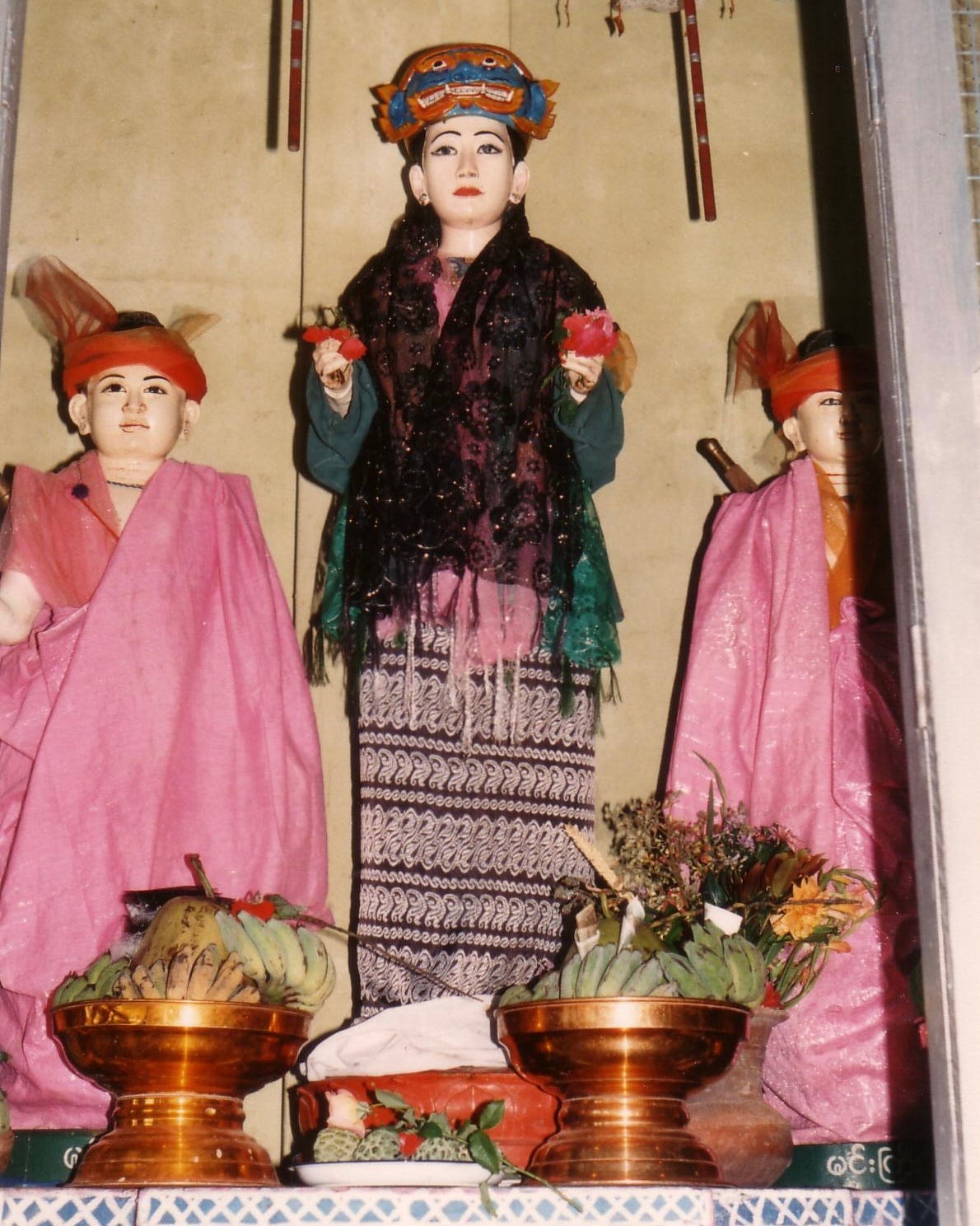
The point is not that this legend should be read as straightforward history. Its importance is cultural and symbolic. Burmese memory itself preserves kalar Muslim figures not merely as outsiders, but as beings absorbed into the country’s royal, religious, and mythic world. Even one of Myanmar’s major nat festivals, Taungbyone, is tied to the Shwe Hpyin brothers, and worshippers are said to avoid pork out of respect for their Muslim origin.
There is another irony here as well. If we return to the older, broader sense of kalar as a term associated with peoples and lands west of Burma, then Burma’s own sacred history becomes much harder to separate from the very category now treated as foreign. Buddhism itself did not originate within Burma, but came from the Indian subcontinent; and the Buddha, too, belonged to that western world which older Burmese usage would have placed well within the orbit of kalar. This is not meant as provocation, but as a reminder of how deeply Burma has always been shaped by crossings, translations, and incorporations from beyond its imagined ethnic center. That should unsettle the language of “guesthood.” What does it mean to call kalars guests in a land where Buddhism becomes the heart of sacred life, where figures such as Byat Wi and Byat Ta enter mythic memory, and where their descendants become part of the country’s nat tradition? Guests do not become part of a people’s pantheon. Guests do not haunt sacred memory. Guests do not become woven into the ritual life of the land.
More specifically, the kalar communities of Burma are not foreign communities that remained unchanged on Burmese soil. Over generations, they became something distinct: Burmese in language and memory, South Asian in ancestry, and religiously diverse—Muslim, Hindu, Sikh, Christian, and more. Their lives cannot be reduced to a single origin point. They carry Burma in their speech, South Asian ethnicity and culture in their family histories, Islam (or other religious traditions) in their practices, and a distinctly local inheritance in their food, dress, ceremonies, humor, and everyday rhythms. This is what “real” integration actually looks like when it happens organically across generations.
This is not failure to integrate. This is Burma.
My NRC Card and the Absurdity of Purity
This is why my own NRC card matters to me.
Kayin, Kaman, Yakhine, Bama, Bengali, and Bengali.
In that list, the state tries to classify me. But it also accidentally tells the truth. It tells the truth that identity in Burma exceeds the clean boxes into which the state wants to place people. It tells the truth that people are mixed. It tells the truth that categories overlap. It tells the truth that the fantasy of pure national belonging is exactly that: a fantasy.
What am I supposed to do with this list?
Am I supposed to choose only one? Am I supposed to apologize for the Bengali part? Am I supposed to explain that one Bengali refers to Rohingya and another to “real” Bengali? Am I supposed to prove that my Kaman identity is acceptable but my Rohingya identity is suspicious? Am I supposed to insist on my Bama Buddhist ancestry so that people will forgive the rest? Am I supposed to become less Muslim, less Bengali, less Rohingya, less visibly kalar, in order to become more Burmese?
No. I refuse that inquisition. I am not Burmese despite these identities.
I am Burmese through them.
That is the point. My identity is not an obstacle to my belonging. It is the very form through which I belong. I do not need to amputate parts of myself to fit into someone else’s idea of Burma. I do not need to become culturally smaller to become politically and socially acceptable.
And this is exactly what the language of “guest” cannot tolerate. It can tolerate minorities only as long as they know their place. It can tolerate Muslims if they are quiet. It can tolerate kalars if they are grateful. It can tolerate Rohingya if they disappear into another name—preferably in toto. It can tolerate diversity only when diversity does not challenge hierarchy, and ideally when it blends into Bama normativity.
Why I Am Kalar
So why am I kalar?
Because the word names a history that cannot be reduced to insult.
Because the people who used it against us should not be the only ones allowed to define it.
Because the alternatives are either too religious, too national, too artificial, or too easily weaponized.
Because “Muslim” does not name my ancestry.
Because “Indian” does not name my history.
Because “Bengali” has been used to erase Rohingya belonging.
Because “South Asian descent” sounds like a census category, not a lived identity.
Because kalar, despite everything, names the social wound more honestly than the polite alternatives.
I am kalar because I refuse the shame attached to the word.
I am kalar because I refuse to be a guest in the country that formed me.
I am kalar because I refuse the idea that Burmese identity belongs only to those who can pass as Bama Buddhist.
I am kalar because I want to remember the older meaning of the word, before colonial resentment, Buddhist nationalism, Islamophobia, and anti-Rohingya racism turned it into a weapon.
But more than that, I am kalar because reclaiming the word forces the real question into the open:
Can Burma imagine belonging without purity?
Until that question is answered honestly, every discussion about democracy, liberation, and justice will remain incomplete. A liberated Burma that still treats minorities as guests is not truly liberated; it is only liberated for the Bama. A democratic Burma that still requires Muslims, Rohingya, Indians, and other minorities to assimilate into Bama Buddhist norms is not truly democratic. A federal Burma that keeps the old racial hierarchy intact has only rearranged power, not dismantled it.
I admit, of course, that reclaiming a word will not solve these problems by itself. It will not undo military violence and the genocide perpetrated. It will not rewrite the 1982 Citizenship Law. It will not end Islamophobia, anti-Indian racism, or the denial of Rohingya identity and their active erasure. It will not magically produce justice.
But naming matters.
Language is not everything, but it is never nothing. The words through which a society names its people reveal the moral limits of its imagination. And in Burma, the word kalar has long revealed who is allowed to belong fully and who must remain conditional.
So I say it deliberately.
I am Kayin.
I am Kaman.
I am Yakhine.
I am Bama.
I am Bengali.
I am Bengali again—that is, I am Rohingya.
I am Muslim.
I am Burmese.
I am the child of mohinga and biryani, of longyi and kurta, of Burmese language and Urdu lingo, of a land that keeps trying to make me choose only one part of myself.
And yes, I am kalar. Not because I accept the slur. But because I reject the shame.
Not because I am asking to be included. But because I was never a guest in my own land. I am not kalar instead of Burmese. I am kalar because this, too, is what Burmese can be.
References
Imperial_Auntorn. “Why was the term ‘Kalar’ (ကုလား), once widely used and considered acceptable, deemed inappropriate after 2012? For instance, in 1928 Yangon, there was an advertisement on a tram for ‘ကုလားမချင်းတောင်းဆွဲနို့ဆီ,’ reflecting the term’s common usage at the time.” Reddit Post. R/Myanmar, September 1, 2024. https://www.reddit.com/r/myanmar/comments/1f6i8u0/why_was_the_term_kalar_ကလ_once_widely_used_and/.
Khin Maung Saw. (Mis)Interpretations of Burmese Words: n.d. https://www.academia.edu/29525819/Mis_Interpretations_of_Burmese_Words_In_the_case_of_the_term_Kala_Kula.
Opening a Can of Worms in Burmese Teaching: Tackling Controversial Words in a Language Class. n.d. Accessed May 21, 2026. http://kennethwongsf.blogspot.com/2017/04/opening-can-of-worms-in-burmese.html.
Thank you for writing and sharing this.